

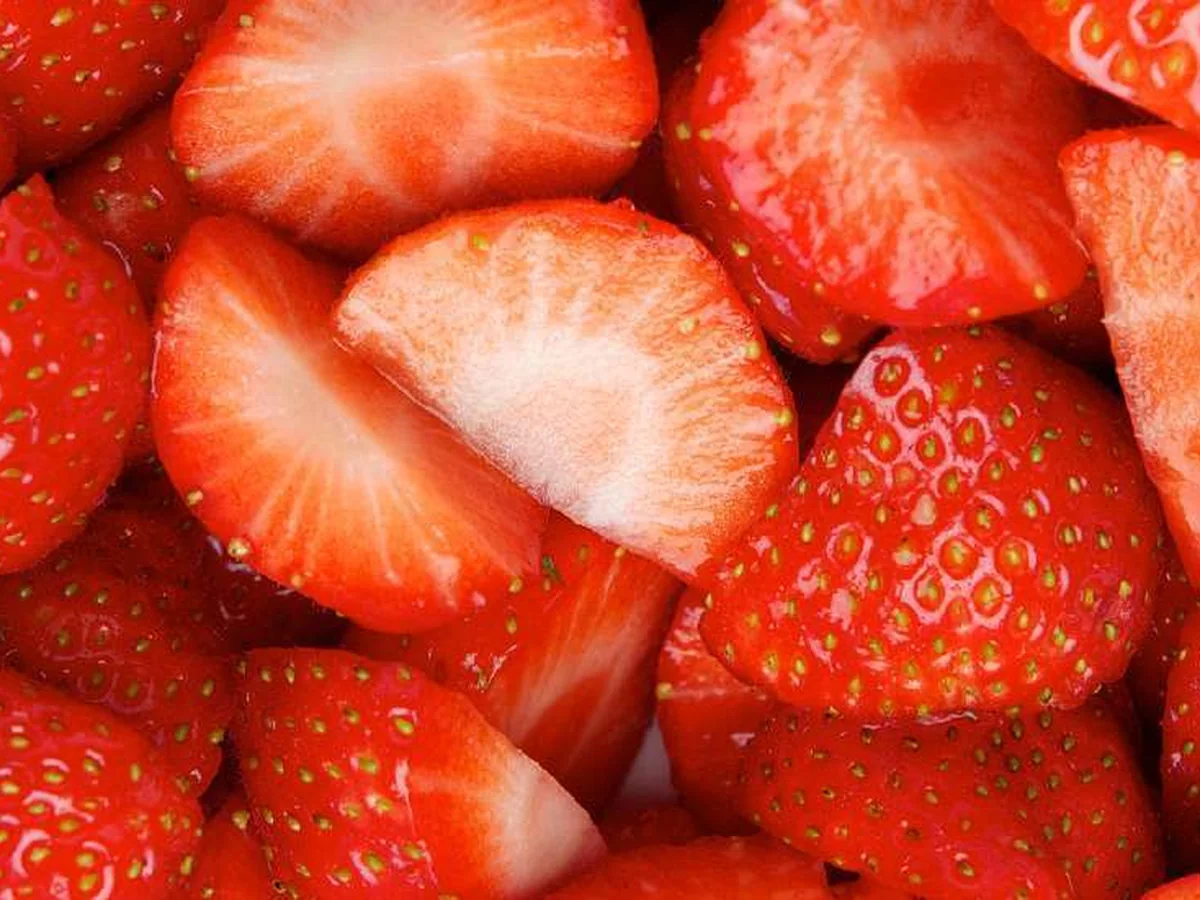
Overview
Because the cosmetic standards that govern whole fruit do not apply once the berry is cut, diced production can use fruit that would not pass whole-fruit grading. This is legitimate and it is what makes diced a more economical input — but it does mean the specification should focus on cube consistency and free-flow rather than on fruit appearance.
Where this grade is used
- Dairy inclusion — yogurt, fromage frais, and dessert products
- Bakery fillings and fruit preparations
- Ice cream and frozen dessert manufacturing
- Foodservice fruit salads where uniform piece size matters
What to specify in an RFQ
- Specify the cube dimension at 10x10mm and state the tolerance. Cube consistency is the primary quality attribute on this product.
- Specify free-flow performance explicitly. Diced fruit clumps more readily than whole fruit because more cut surface is exposed, and clumping is the most common complaint on this format.
- Agree the fines and fragment tolerance — the percentage of undersized pieces produced during cutting.
- Brix expectations still apply and still vary by variety. The cut format does not change the underlying fruit.
- Ask whether the diced product runs on dedicated fruit or on fruit sorted out of whole-fruit production. Both are normal; the answer affects batch-to-batch consistency.
How this compares to the other grades
Shared IQF Strawberry specifications
These apply across all grades and cuts of IQF Strawberry. Grade-specific requirements sit on top of them.
| Sizing Options | Whole: 15-22mm, 22-26mm, 26-35mm. Diced: 10×10mm. Sliced: 6-8mm thickness. |
|---|---|
| Storage Temperature | -18°C or colder throughout transit and storage |
| Microbiology Limits | E. Coli < 10 cfu/g, Salmonella: Absent in 25g, Listeria: Absent in 25g |
| Brix Levels | Min 7.0 to 9.0 depending on crop variety (Festival, Senga, Fortuna) |
| Packing Configurations | 1×10kg carton bulk, 4×2.5kg polybags per carton, or customized packaging |
| Pesticide Control | Reviewed against EU Maximum Residue Limits (MRL) / FDA requirements |
| Packing options | 1×10kg bulk; 4×2.5kg polybags; 20×400g retail; Private label |
| Harvest season | Nov–Mar (peak Dec, Jan, Feb) — see the full calendar |
Frequently asked questions
What size is Egyptian IQF diced strawberry?
Calibrated to a 10x10mm cube. Cube consistency and free-flow performance are the primary quality attributes, in place of the caliber banding used for whole fruit.
Is diced strawberry made from lower quality fruit?
It is commonly made from fruit that would not meet whole-fruit cosmetic grading — irregular shape, minor surface marks — which is entirely legitimate since those attributes disappear once the berry is cut. The eating quality and Brix are the same. It is worth asking whether a given supplier runs dedicated fruit or sorted-out fruit, since that affects batch consistency.
What is the most common problem with diced IQF strawberry?
Clumping. Cutting exposes more surface area than whole fruit, so diced product is more prone to sticking together in the carton. Free-flow performance should be specified explicitly rather than assumed.
Other IQF Strawberry grades and cuts
Include the grade band, volume, packing format, destination, Incoterm, required documents, and target shipment window for structured partner-route review.
Submit RFQ/RFP